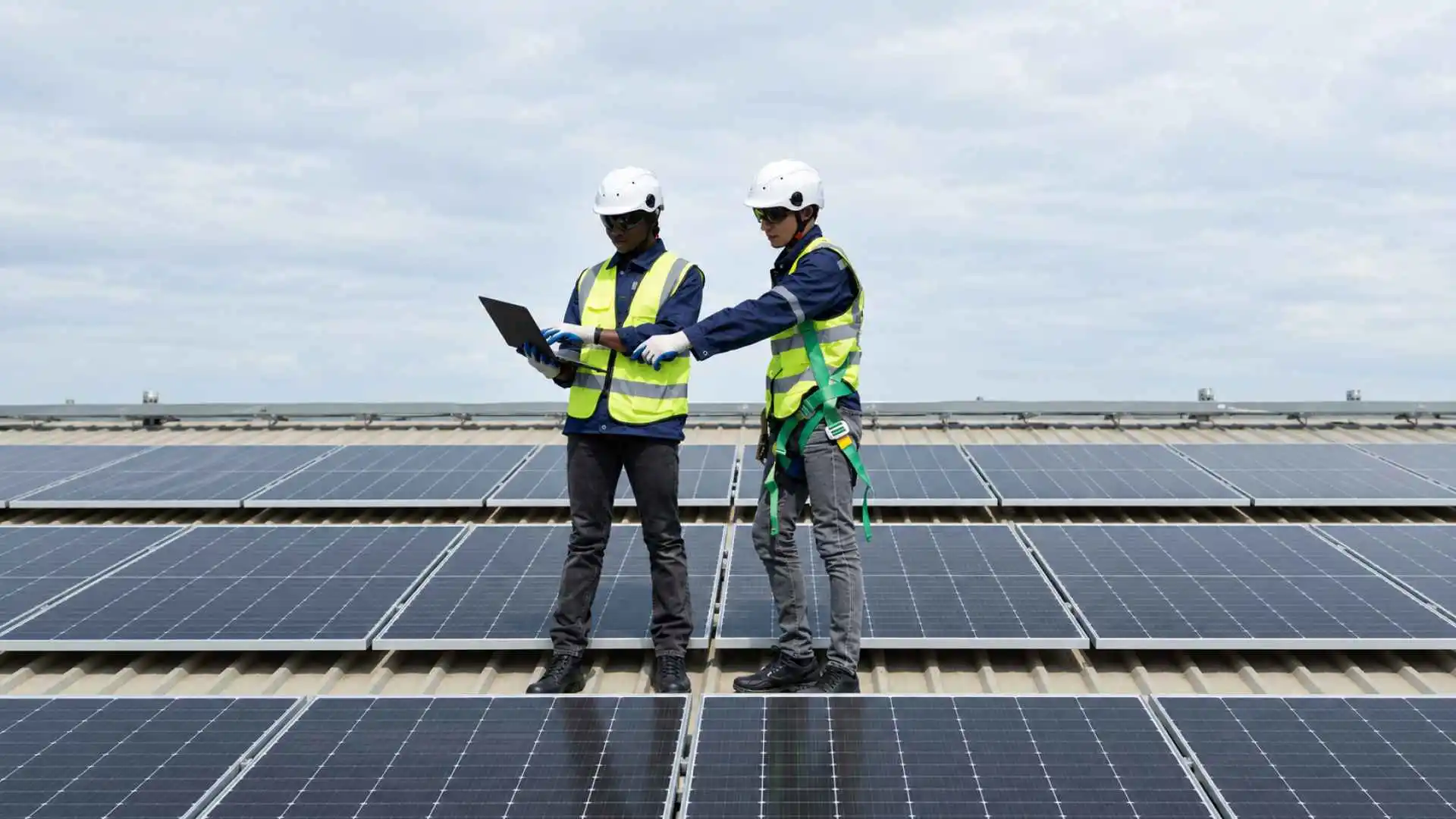

Collaboration Between the Education Sector and Industry for the Development of Solar Power Plants
The Electrical Engineering Program at Muhammadiyah University of Malang (UMM) is strengthening its commitment to the development of renewable energy through the launch of a Center of Excellence (CoE) for Solar Power Plants (PLTS). This program is the result of a collaboration with three companies: PT Alfan Mechatronics Innovation, Etrama Energi, and other industry partners.
The Electrical Engineering Program at Muhammadiyah University of Malang (UMM) has partnered with three companies, PT Alfan Mechatronics Innovation, PT Etrama Nusa Energi, and PT Zaada Bana Engineering, to launch a plan to open Center of Excellent (CoE) Pembangkit Listrik Tenaga Surya (PLTS).
The Dean of UMM’s Faculty of Engineering, Ilyas Masudin, said that curriculum development must now align with industry needs, particularly to keep pace with the demands of education in the era of Industry 4.0.
Enhancing Students’ Competence in Solar Energy
The establishment of the Solar Power Plant Center of Excellence (CoE PLTS) aims to provide students with a more hands-on learning experience. In addition to understanding the theory, students can also learn about solar power plant technology directly through practical training, research, and collaboration with industry partners.
“That is why, expanding our partnerships with stakeholders Other measures need to be taken so that the curriculum can be adapted. That way, students and graduates can be equipped with a variety of skills and skill “is beneficial in helping students become independent individuals,” Ilyas Masudin said on Friday (February 18, 2022).
Ivan Ahsanul Insan, CEO of PT Zaada Bana Engineering, said that, in essence, the curriculum offered by UMM’s Electrical Engineering program is sufficient.
However, there is a need for additional training in the areas of entrepreneurship, sales engineering, and soft skills development. Ivan believes these three areas will be able to bridge the gap between management project, time scheduling, WBS, project schedule and proposal preparation. Especially given the current high market demand.
Yongki Adi Pratama, Technical Director of PT Etrama Nusa Energi, added that education should be able to produce job-ready workers. Therefore, this is a highly practical step toward improving economic efficiency and fostering entrepreneurship within a single platform.
Yongki also proposed several key points for the future internship program, including: product knowledge, brand component or major equipment, as well as planning and implementing installations in the field, with the goal of creating a college experience that closely resembles the work environment.
“I think internships are also very effective when conducted on an ongoing basis. They can last four to six months. Especially considering that human resources can be a crucial business asset in the future,” he said.
Benefits of the Solar Power Plant CoE for Students and Industry
- Enhancing students’ technical skills in solar power systems.
- Strengthening collaboration between universities and industry.
- Supporting research and innovation in renewable energy.
- Preparing graduates who are ready to meet the needs of the energy industry of the future
Conclusion
The opening of the Solar Power Plant Center of Excellence (CoE) by UMM’s Department of Electrical Engineering in collaboration with industry partners marks a concrete step toward cultivating top talent in the field of solar energy. This collaboration not only enhances the quality of education but also contributes to the development of a sustainable renewable energy ecosystem in Indonesia.